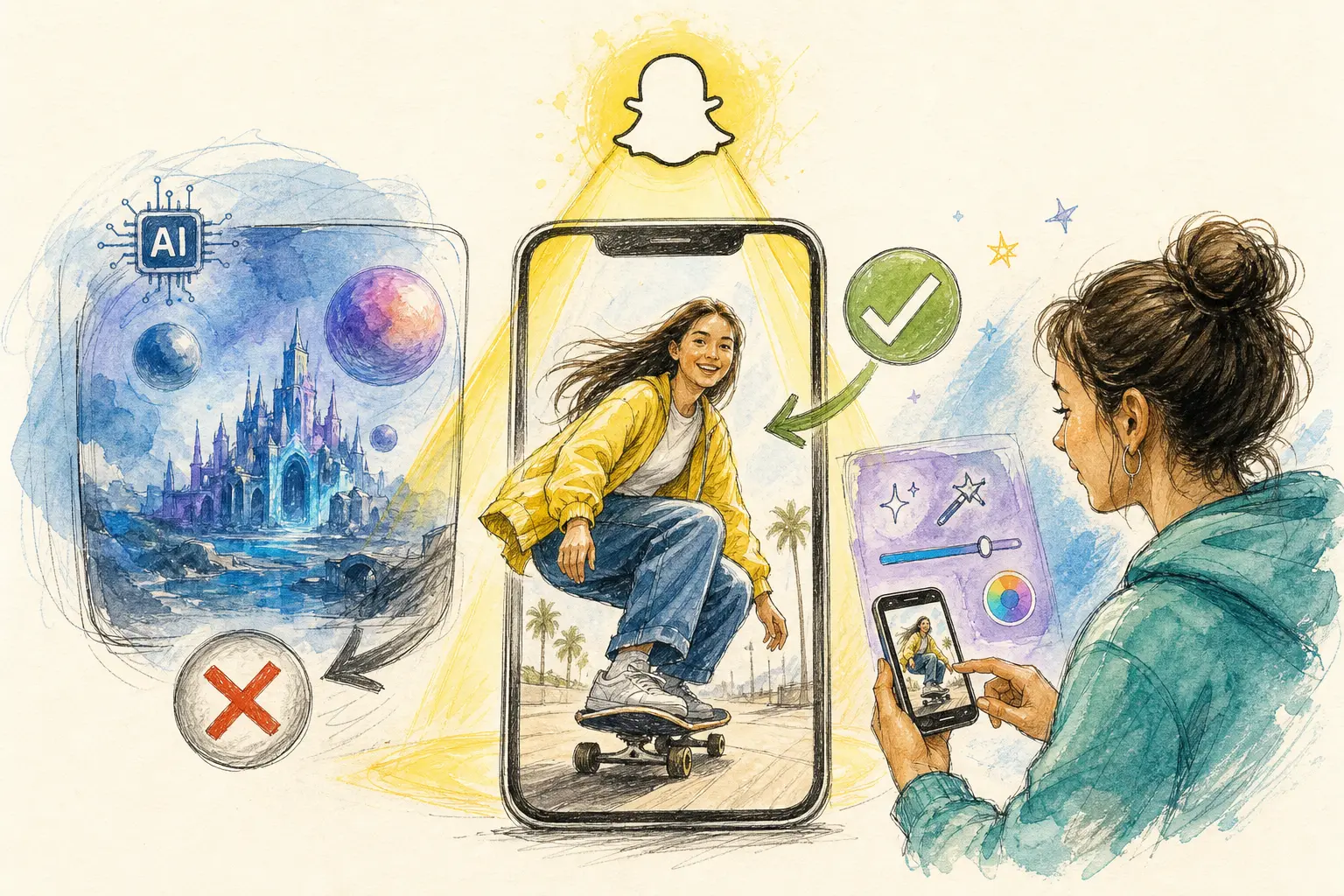
Snapchat is changing how Spotlight recommendations work so that fully AI-generated videos are no longer eligible for promotion. The move matters because Spotlight is one of the app’s main discovery surfaces, and the new rule pushes Snapchat toward content it considers more clearly human-made.
What Snapchat said
In a Friday announcement, Snapchat said its recommendation systems will be adjusted so that only videos created by real people can be recommended in Spotlight. The company said it wants the feed to stay focused on “authentic creativity,” original perspectives, and personal storytelling.
What creators can still do with AI
Snapchat is not banning AI tools altogether. Creators can still use the company’s AI features to edit or enhance their videos. The distinction is between using AI as a production aid and posting content that is fully generated by AI.
Why the policy is changing now
The update fits into a wider industry reaction against low-quality synthetic content, often described as “AI slop” — a shorthand for mass-produced, repetitive, or low-effort AI material. Platforms are responding in different ways:
- some are deprioritizing AI-heavy posts in recommendation systems,
- some are adding reporting tools,
- and some are removing certain AI features entirely.
Snapchat had already signaled in April that users would see less AI-generated content in Spotlight, so Friday’s change extends that direction.
How other platforms are responding
Snapchat is not alone in tightening its rules. LinkedIn recently added a button that lets users flag posts as seeming like AI slop. Substack introduced a tool to help users identify AI-written newsletters. Meta also removed an Instagram feature after criticism over AI edits involving public accounts. YouTube, meanwhile, has clarified its monetization rules so that “inauthentic content” cannot earn revenue, including generic or template-based material and some AI persona content involving sensitive topics like health and finance.
Another Snapchat safety change
The company also introduced separate content controls last month aimed at protecting younger users. Snapchat said people aged 13 to 15 can share Spotlight posts only with mutual followers, a restriction meant to reduce the risk of doxxing, or exposing someone’s private information online.
Snapchat’s latest update shows a broader shift in how platforms are drawing lines around AI-generated content: AI can remain a tool, but it is increasingly being separated from the content that platforms choose to reward and recommend.