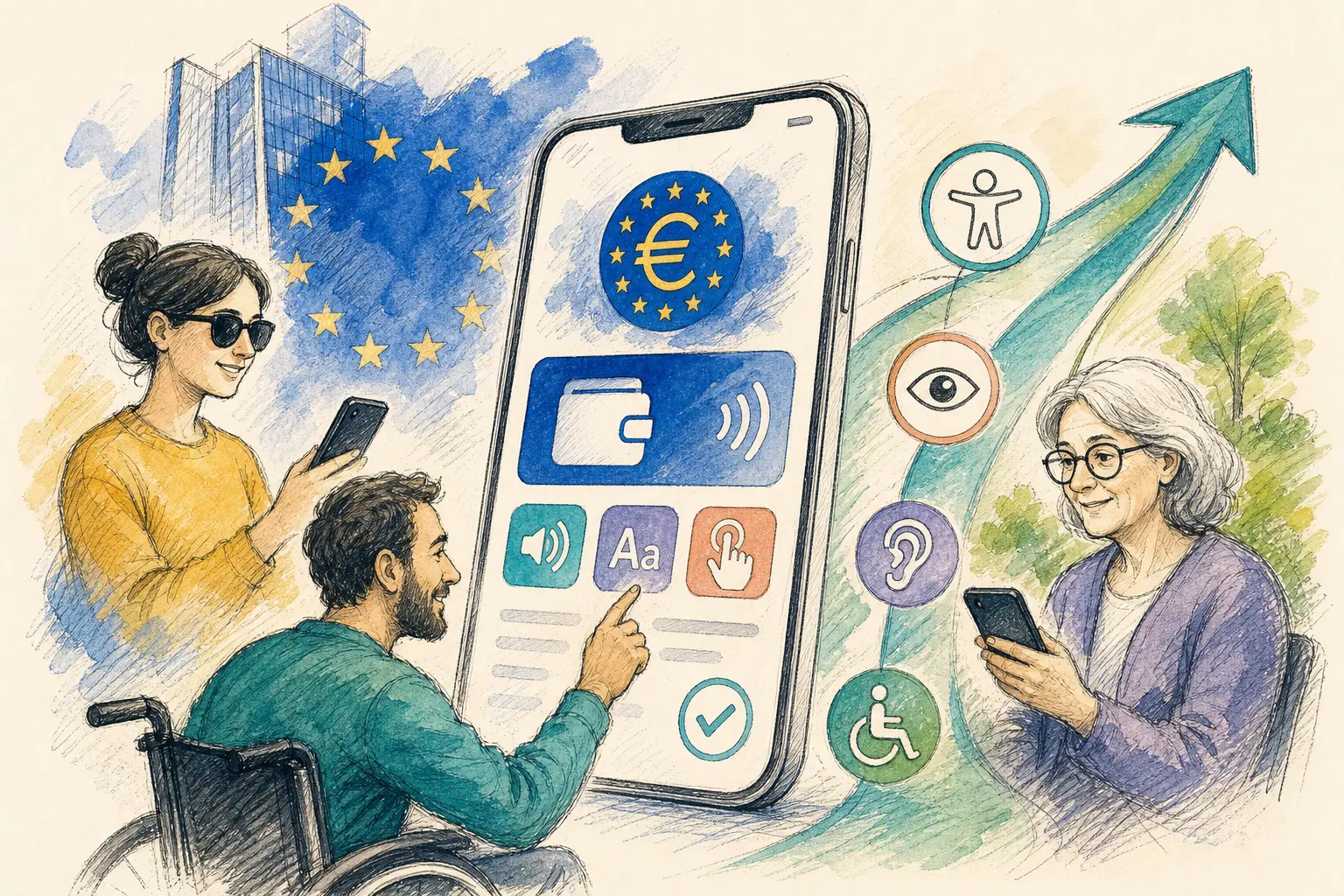
The European Central Bank (ECB) says the app for its planned digital euro will be designed to go beyond the European Union’s accessibility standards. That matters because a central bank digital currency only works as a payment tool if people can actually use it across different abilities and devices.
What the ECB is saying
The ECB’s message is straightforward: accessibility is being treated as a core requirement, not an afterthought. The digital euro app is expected to meet EU rules and aim higher, which suggests the bank wants the system to be usable by a wider range of people, including those who rely on assistive technologies.
Accessibility standards set expectations for features such as readable interfaces, screen-reader compatibility, and usable navigation. In this context, exceeding those standards would mean building with a broader group of users in mind from the start.
Why this matters for the digital euro
A digital euro is a proposed central bank digital currency, meaning a state-backed digital form of money. For such a system, adoption depends not just on policy design and security, but on whether everyday users can access it without friction.
An app that is easier to use for people with disabilities can also improve the experience for the general public. Clearer design, simpler flows, and stronger accessibility support often make financial apps more practical overall.
The broader takeaway
The ECB’s emphasis on accessibility signals that user experience is becoming part of the digital euro’s credibility. For a public payment system, compliance may be the minimum; broad usability is what determines whether it can function at scale.